
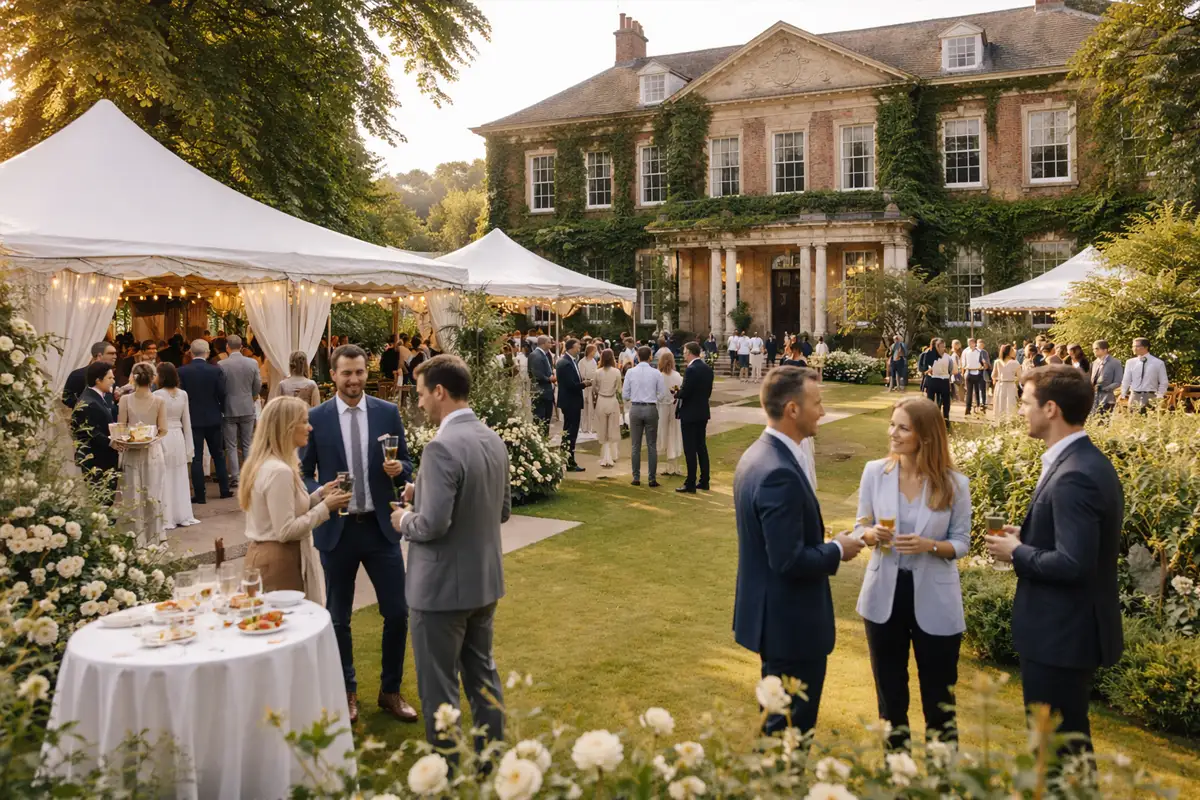
Brand Impact and First Impressions
The venue you choose for a corporate event communicates powerful signals about your brand before a single word is spoken. Historic venues immediately convey prestige, credibility, and long-term stability — qualities that are difficult to replicate in standard conference centres or hotels.
Why historic settings strengthen brand perception
- Association with heritage, tradition, and excellence
- Stronger emotional response from guests and clients
- Higher perceived value of the event experience
- Improved memorability compared to neutral venues
Clients and partners subconsciously link architectural quality, craftsmanship, and historic significance with organisational reliability and leadership strength. This effect is especially valuable for investor meetings, executive summits, product launches, and high-level client hospitality.
Unlike modern venues, historic spaces provide unique visual identity. Branded backdrops, staging, and presentations appear more distinguished when framed by period interiors, grand staircases, and formal gardens.
For companies competing in high-value markets, venue selection becomes an extension of corporate branding strategy rather than a simple logistical decision.
Atmosphere, Heritage, and Guest Engagement
Historic venues create immersive environments that naturally enhance guest engagement. Architecture, décor, and surrounding landscapes establish an emotional context that modern spaces rarely achieve.
Engagement advantages of historic settings
- Stronger emotional connection to the event environment
- Natural conversation starters and networking catalysts
- Higher attention levels during presentations and speeches
- Enhanced guest satisfaction and dwell time
Guests are more likely to explore, interact, and remain attentive when surrounded by visually rich environments. Heritage features encourage informal networking, guided tours, and spontaneous discussions that strengthen professional relationships.
Historic venues also support storytelling opportunities. Companies can integrate the building’s history into opening remarks, branding narratives, or hospitality programmes, reinforcing themes of longevity, innovation, or transformation.
By combining professional programming with atmospheric surroundings, historic venues increase both cognitive and emotional engagement across all event stages.
Space Options, Layouts, and Capacity Planning
Historic venues typically offer a diverse range of interconnected rooms, halls, galleries, and outdoor spaces. This variety enables flexible programming but requires careful layout planning to maintain flow, comfort, and operational efficiency.
Key space planning considerations
- Main hall capacity for plenary sessions and keynote speeches
- Breakout rooms for workshops and private meetings
- Reception areas for networking and hospitality
- Circulation routes between floors and wings
Unlike purpose-built conference centres, historic buildings often feature irregular room shapes, load-bearing walls, fixed columns, and protected architectural elements. These characteristics limit reconfiguration options and require customised seating and staging layouts.
Capacity limits are usually lower than in modern venues and may vary between rooms depending on fire safety regulations and heritage protection rules.
Early collaboration with venue coordinators allows optimal zoning of presentation areas, catering stations, exhibition displays, and VIP lounges without compromising architectural integrity or guest comfort.
Technology, AV Requirements, and Connectivity
Technology infrastructure is one of the most critical operational factors when hosting corporate events in historic venues. While heritage buildings offer exceptional atmosphere, they often present technical limitations that must be addressed through careful planning and external support.
Key technical considerations
- Power capacity and distribution points
- Internet bandwidth and network stability
- Audio system coverage and acoustics
- Projection surfaces and screen placement
Many historic venues were not designed for modern audiovisual demands. Limited ceiling load capacity, restricted cabling routes, and protected architectural finishes may prevent permanent installations or ceiling-mounted equipment.
Wireless connectivity can also be inconsistent due to thick stone walls, vaulted ceilings, and building layouts. This directly affects live streaming, hybrid events, app-based polling, and real-time presentations.
Professional AV partners familiar with heritage environments can design temporary rigging systems, floor-mounted lighting, discreet speaker placement, and cable routing that protects historic interiors while delivering broadcast-level quality.
Catering, Service Standards, and Timing
Food and beverage service plays a central role in corporate hospitality, client perception, and overall event pacing. Historic venues often combine high-end catering traditions with spatial constraints that influence service design and timing.
Catering planning priorities
- Kitchen size and preparation capacity
- Service routes and waiter circulation paths
- Menu adaptability for dietary requirements
- Break timing and refreshment station placement
Older buildings may have compact kitchens, limited service elevators, and narrow corridors. These factors restrict menu complexity and require precise scheduling to avoid delays during peak service periods.
Well-planned catering supports programme flow. Coffee breaks, working lunches, and evening receptions should align with presentation schedules and networking objectives rather than interrupt them.
High service standards are especially important for executive audiences and client-facing events. Menu presentation, tableware quality, and staff professionalism directly influence brand perception and post-event evaluations.
Logistics, Access, and Supplier Coordination
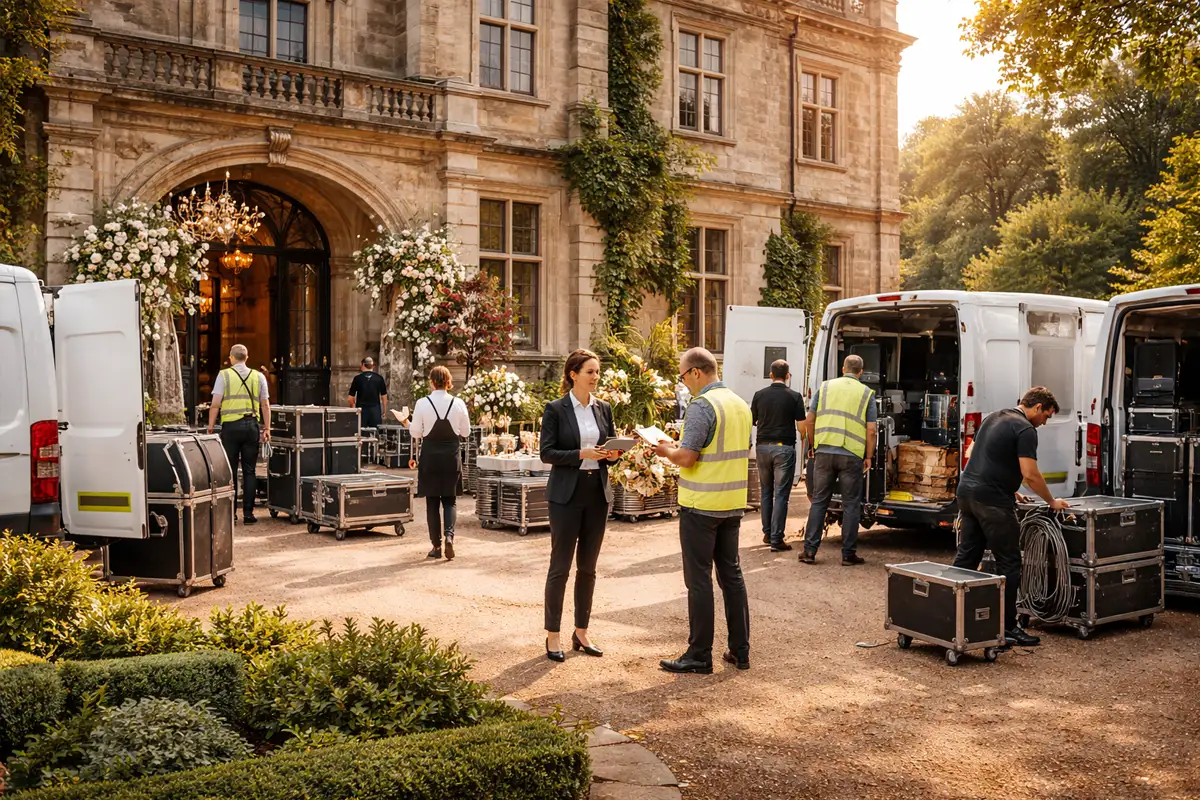
Historic venues require precise logistical coordination due to restricted access points, protected surfaces, limited vehicle movement, and strict heritage compliance rules. Poor planning in this area often causes the most serious operational disruptions.
Logistical challenges to assess
- Delivery time windows and vehicle size limits
- Loading bay distance from event spaces
- Lift availability and stair access restrictions
- Storage areas for equipment and materials
Many historic estates impose narrow delivery routes, weight restrictions on driveways, and limited unloading zones. Large trucks, staging vehicles, and broadcast units may require special permissions or alternative parking solutions.
Supplier schedules must be tightly coordinated to avoid congestion, noise conflicts, and installation overlaps. Multiple contractors working simultaneously in protected interiors increases the risk of delays and damage.
Close collaboration between venue management, event producers, AV teams, and caterers ensures efficient setup, smooth transitions, and controlled breakdown without compromising architectural integrity or guest experience.
Privacy, Security, and Compliance Considerations
Corporate events often involve confidential discussions, sensitive data, high-profile guests, and intellectual property. Historic venues provide exclusivity and discretion, but also introduce unique security and compliance challenges.
Security and privacy priorities
- Exclusive use versus shared public access
- Controlled entry points and guest accreditation
- Secure areas for executive meetings and documents
- Data protection and network security compliance
Many historic venues operate as public attractions, museums, or hotels. Partial closures and shared access zones may compromise confidentiality unless exclusive hire is secured.
Thick stone walls and secluded grounds provide natural privacy, but they may also limit CCTV coverage, radio communication, and mobile signal reliability.
Compliance requirements may include fire safety approvals, capacity certification, disability access standards, alcohol licensing, and heritage protection regulations. Early documentation review prevents last-minute operational restrictions.
Budget, Hidden Costs, and Contract Terms
Historic venues offer exceptional prestige but often involve complex pricing structures and additional compliance costs. Transparent contract review is essential to maintain budget control and avoid unexpected charges.
Common hidden cost categories
- Extended hire hours and overtime staffing
- Mandatory in-house suppliers or service minimums
- Heritage supervision and conservation fees
- Additional insurance and damage deposits
Many historic properties require the use of approved AV, catering, and production partners. While this ensures compliance, it may reduce pricing flexibility and supplier negotiation leverage.
Damage deposits are typically higher than in modern venues due to irreplaceable finishes, artworks, and architectural features. Insurance coverage limits should reflect full replacement values where applicable.
Longer-term contracts may also include noise curfews, lighting restrictions, branding limitations, and restrictions on structural installations. These terms directly affect programme design and branding execution.
Conclusion
Historic venues offer a powerful combination of prestige, atmosphere, and exclusivity that few modern locations can replicate. For corporate events, they provide exceptional brand positioning, enhanced guest engagement, and memorable environments that strengthen professional relationships.
However, success depends on careful planning across technology, logistics, catering, security, and contract management. Heritage buildings introduce operational constraints that require experienced suppliers, realistic budgets, and disciplined coordination.
When selected and managed correctly, historic venues become more than event locations — they become strategic assets that elevate corporate image, reinforce brand authority, and create lasting impressions among clients, partners, and stakeholders.
By aligning venue choice with business objectives, audience profile, and operational capabilities, organisations can unlock the full potential of historic settings for high-impact corporate events.