
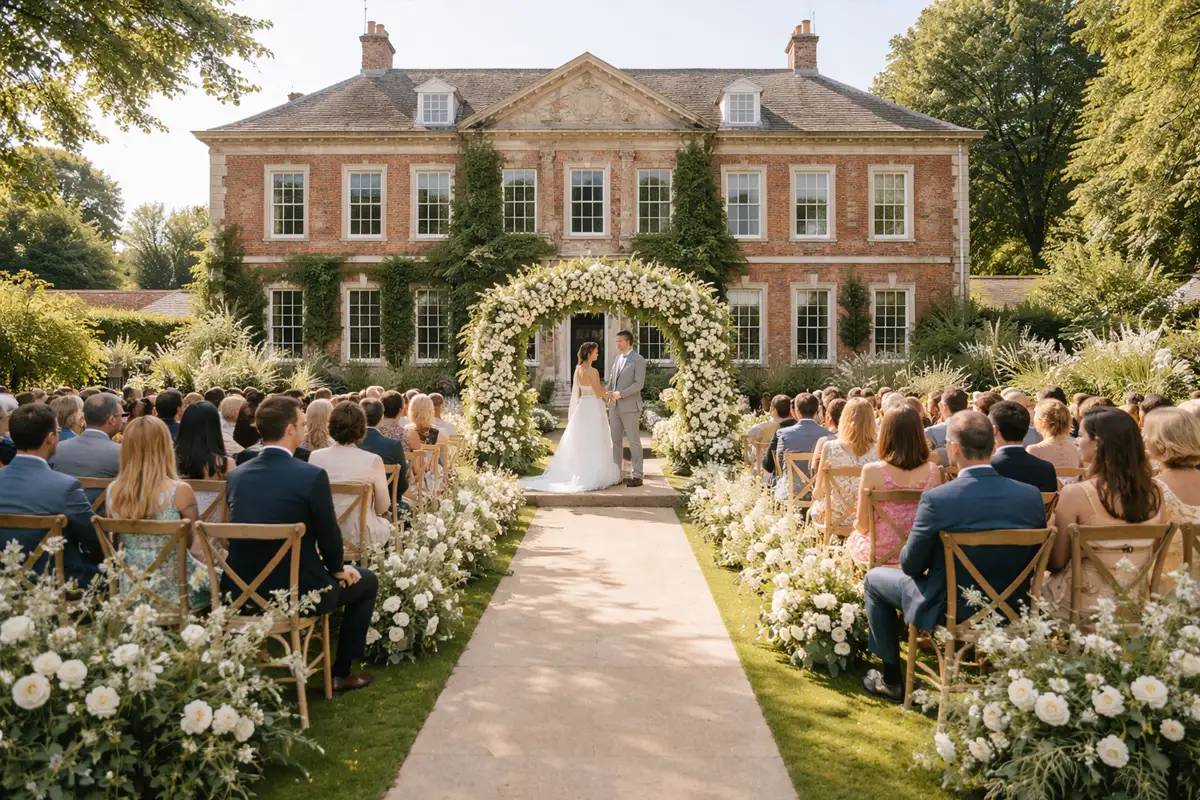
Location and Guest Accessibility
The location of your country house wedding venue plays a crucial role in guest experience, scheduling, and overall comfort. Even the most beautiful estate can create logistical problems if it is difficult to reach or poorly connected.
Key factors to evaluate
- Distance from major towns, motorways, and transport hubs
- Quality of access roads, signage, and lighting
- Availability of on-site or nearby parking
- Taxi services and late-night transport options
For weddings with many travelling guests, proximity to Shrewsbury, Telford, Ludlow, or main rail stations can significantly reduce delays and stress.
Also confirm the availability of local accommodation. If guests need to travel more than 30–40 minutes after the reception, consider arranging transport or selecting a venue with on-site rooms.
Venue Style and Atmosphere
A country house wedding is defined by its atmosphere. Architecture, interior design, gardens, and surrounding landscapes all contribute to the emotional tone of your celebration.
Common country house styles
- Historic manor houses with period features
- Georgian or Victorian estates with formal gardens
- Modern country properties with contemporary interiors
- Rustic halls with exposed beams and stone walls
Your venue style should naturally support your chosen wedding theme, colour palette, and level of formality. Selecting a venue that already reflects your vision reduces decoration costs and setup time.
Pay attention to natural light, ceiling height, wall colours, and outdoor views. These elements strongly influence photography, mood, and how spacious the venue feels during the event.
Capacity and Space Planning
Accurate capacity planning prevents overcrowding, improves guest comfort, and ensures smooth movement throughout the day. Never rely on marketing photos alone — layouts change significantly between ceremonies, dining, and evening receptions.
Questions to ask the venue
- Maximum seated capacity for formal dining
- Minimum guest numbers required for booking
- Separate rooms or one flexible space for the full day
- Dance floor size and placement options
- Space for band, DJ, or entertainment
A well-planned layout allows clear walkways, comfortable table spacing, and easy access to bars, restrooms, and exits.
Ask the venue to provide scaled floor plans and sample layouts. This helps visualise guest flow between ceremony seating, dining tables, and the evening dance area.
Indoor and Outdoor Ceremony Options
One of the greatest advantages of a country house wedding is the ability to choose between indoor elegance and outdoor natural beauty. Having both options available adds flexibility and reduces stress in unpredictable weather conditions.
What to confirm in advance
- Licensed outdoor ceremony locations on the property
- Indoor ceremony rooms as weather backup
- Maximum guest capacity for each ceremony space
- Accessibility for elderly or disabled guests
Outdoor ceremonies create stunning visuals, but they require careful planning around sound systems, seating comfort, and weather protection.
Ask how quickly the venue staff can rearrange spaces if rain or strong wind occurs. Efficient transitions protect both the ceremony flow and your photography schedule.
Season, Weather, and Timing
The season you choose directly affects lighting, temperature, garden appearance, supplier availability, and guest comfort. Country house venues often look dramatically different across the year.
Seasonal considerations
- Spring — blooming gardens, variable temperatures, higher rainfall risk
- Summer — long daylight hours, peak pricing, heat management required
- Autumn — rich colours, softer light, cooler evenings
- Winter — atmospheric interiors, lower costs, limited outdoor use
Timing within the day is equally important. Ceremony start time affects photography, dinner service, and evening entertainment.
Confirm sunset times, average temperatures, and historical rainfall patterns for your chosen month. This information helps optimise ceremony timing and reception comfort.
Catering and Service Logistics
Catering is one of the most complex operational aspects of a country house wedding. Kitchen facilities, service routes, and supplier coordination strongly influence food quality and guest satisfaction.
Essential catering questions
- In-house catering or external suppliers allowed
- Kitchen size and preparation capacity
- Service style — plated, buffet, family-style, or stations
- Bar service options and licensing
Country house kitchens vary widely in size and equipment. Limited facilities may restrict menu choices or increase staffing requirements.
Also confirm staff access routes, service timing windows, and late-night catering options. Smooth logistics ensure food is served hot, drinks remain available, and service flows seamlessly throughout the day.
Supplier Coordination and Setup Access
Country house weddings often involve multiple suppliers working across different areas of the estate. Clear coordination and controlled access are essential to avoid delays, congestion, and setup conflicts.
Key logistical points to clarify
- Earliest access time for decorators and florists
- Separate loading and unloading zones
- Distance between parking and event spaces
- Storage areas for equipment and flowers
Large estates may require long walking distances between service entrances and ceremony rooms, which affects timing and staffing levels.
Confirm power availability, sound restrictions, and installation limits for historic interiors. Some country houses restrict candles, hanging décor, or heavy staging to protect heritage features.
Guest Comfort and Facilities
Guest comfort directly influences how your wedding is remembered. Even the most beautiful venue loses its charm if facilities are inadequate or poorly located.
Facilities to evaluate carefully
- Number and distribution of restrooms
- Climate control and ventilation systems
- Accessibility for elderly and disabled guests
- Quiet areas for children or elderly relatives
Historic country houses may have limited modern infrastructure. Confirm that facilities can comfortably support your full guest count throughout the day.
Also assess lighting levels, signage clarity, cloakroom capacity, and heating availability for evening receptions or winter weddings.
Photography Locations and Schedule Planning
Country house estates provide exceptional photographic opportunities, but timing and location planning are critical to avoid conflicts with guests, suppliers, and changing light conditions.
Essential photography considerations
- Garden access during guest arrival and drinks reception
- Indoor backup locations for rain or wind
- Distance between ceremony, reception, and portrait areas
- Restrictions on flash or tripod use in historic rooms
Golden-hour light is especially valuable for couple portraits, but it requires precise coordination with dinner service and guest transitions.
Walk the estate with your photographer in advance. Identify shaded summer areas, sheltered winter options, and quiet corners away from guest traffic to maximise image quality and privacy.
Country House Wedding Costs and Budget Planning
A country house wedding is considered a premium wedding format in the UK. The total cost depends on venue class, guest count, season, catering level, accommodation, and supplier complexity. Understanding typical price ranges helps you plan realistically and avoid unexpected overspending.
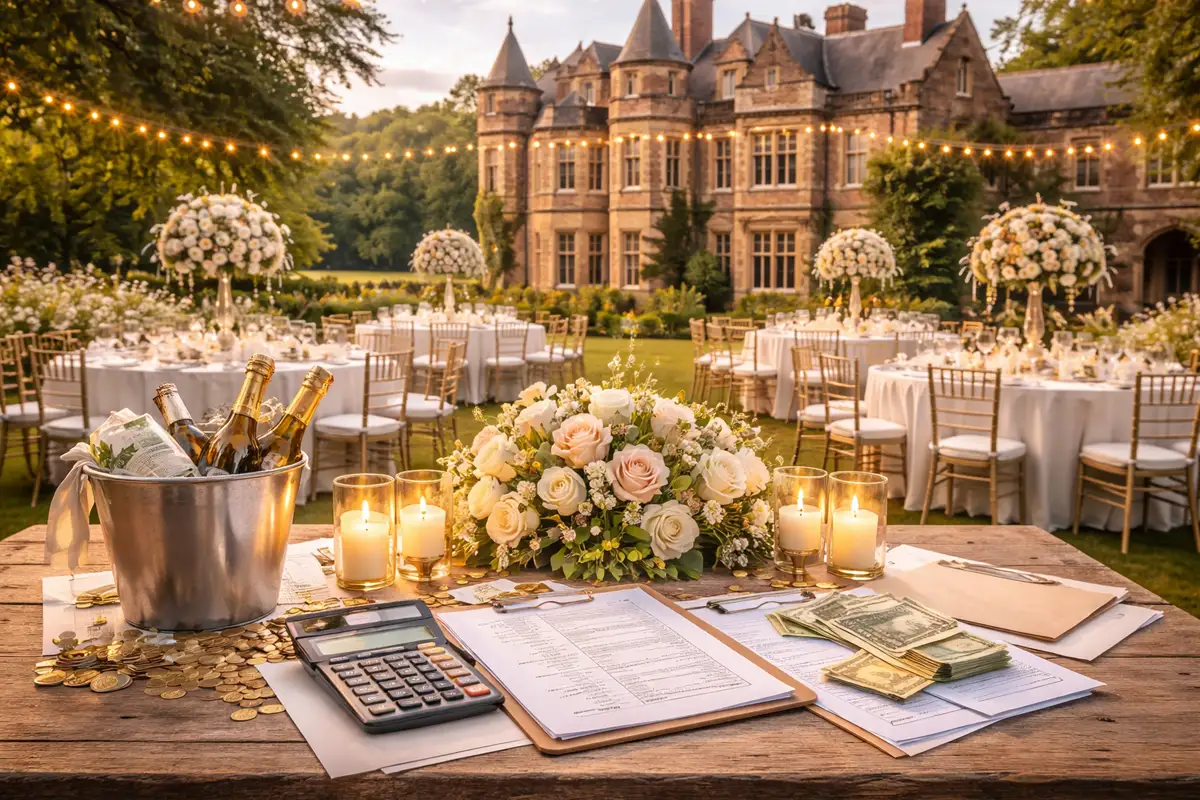
Typical venue hire costs in the UK
Venue hire usually covers exclusive use of the estate, ceremony rooms, reception halls, gardens, basic furniture, and on-site coordination.
| Venue Category | Typical Hire Price | What Is Included |
|---|---|---|
| Mid-range country house | £3,000 – £6,000 | Ceremony rooms, reception hall, gardens, staff support |
| Luxury manor estate | £6,000 – £12,000 | Exclusive use, premium interiors, extended hours |
| High-end private estate | £12,000 – £25,000+ | Full estate access, multiple buildings, luxury coordination |
Weekend summer dates command the highest prices. Off-season weddings (November to March) can reduce venue hire by 20–40%.
Catering and drinks budget
Catering represents one of the largest portions of a country house wedding budget. Most venues require in-house catering or approved suppliers.
- Three-course plated meal: £60 – £120 per guest
- Canapés and drinks reception: £8 – £20 per guest
- Evening buffet or street food: £15 – £30 per guest
- Standard drinks package: £30 – £60 per guest
For 100 guests, catering and drinks typically range between £9,000 and £18,000 depending on menu quality and bar service.
Accommodation and guest lodging
Many country houses offer on-site rooms for the couple and selected guests.
- Bridal suite: often included or £200 – £500 per night
- Guest rooms: £100 – £250 per room
- Exclusive accommodation buy-out: £2,000 – £6,000+
Providing accommodation significantly improves guest comfort but adds substantially to the overall budget.
Decoration, furniture, and styling
Country houses often require minimal decoration, but styling costs vary depending on complexity.
- Floral design and centrepieces: £800 – £3,000+
- Chair covers, linen, and table styling: £300 – £1,200
- Ceremony arch and installations: £400 – £1,500
- Lighting upgrades and candles: £250 – £1,000
Additional professional services
- Photographer: £1,200 – £3,000
- Videographer: £1,000 – £2,500
- Band or DJ: £500 – £2,000
- Wedding planner or coordinator: £800 – £2,500
Total estimated cost overview
For most couples in the UK, a full country house wedding typically falls within the following ranges:
- Small elegant wedding (60 guests): £15,000 – £22,000
- Medium classic wedding (100 guests): £22,000 – £35,000
- Large luxury wedding (150+ guests): £35,000 – £55,000+