
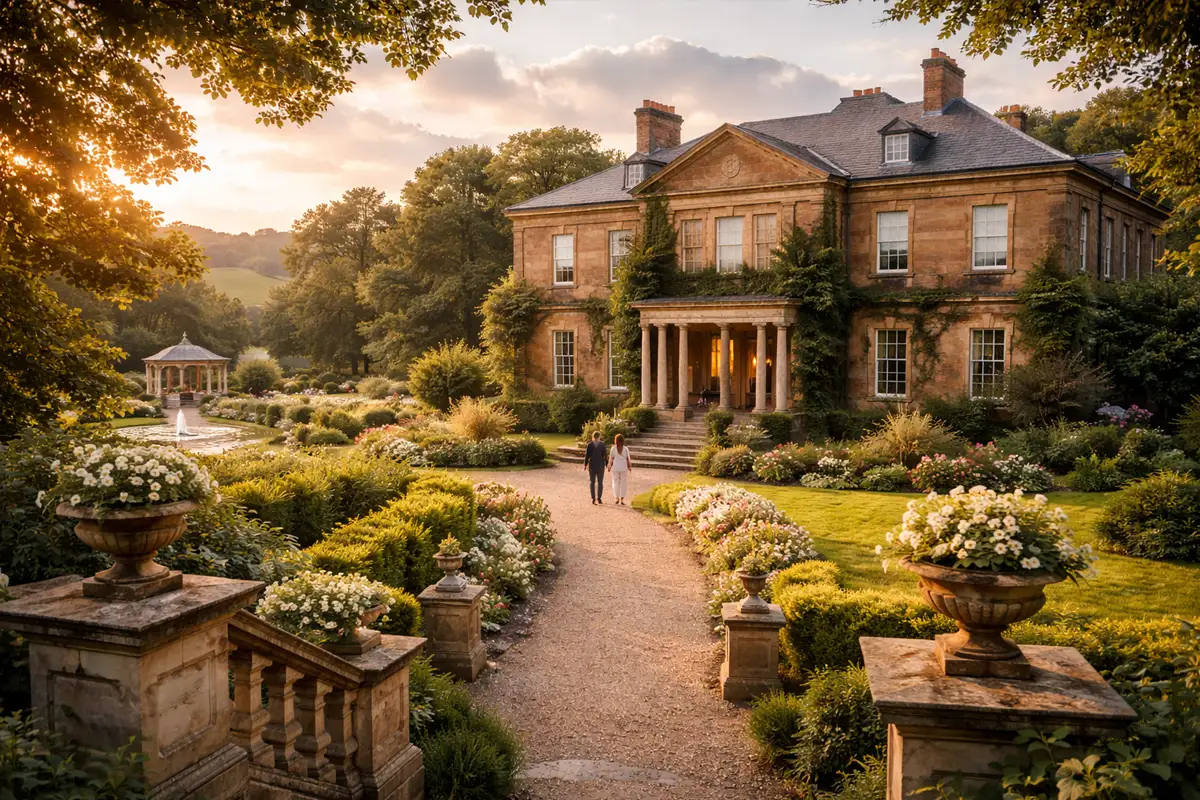
Contents:
- Origins of the British Country House
- Key Architectural Periods and Styles
- The Great Hall and Formal Reception Rooms
- Gardens, Landscapes, and Estate Design
- Heritage Features and Decorative Elements
- Adapting Historic Houses for Modern Events
- Preservation and Restoration Practices
- The Role of Country Houses in Modern Hospitality
- The Future of Heritage Venues
Origins of the British Country House
The British country house has its origins in medieval manor houses and fortified residences built by landowning families from the Middle Ages onward. These early estates served not only as family homes but also as administrative centres, symbols of power, and hubs of rural governance.
By the Tudor period, defensive needs declined and architecture began to emphasise comfort, status, and display. Country houses evolved into grand residences designed to reflect wealth, lineage, and political influence, often surrounded by extensive agricultural lands and formal gardens.
Early functions of country houses
- Residences for aristocratic and landed families
- Administrative centres for managing estates and tenants
- Social venues for hosting political and cultural gatherings
- Symbols of family heritage and social standing
These estates became focal points of rural society, hosting visits from monarchs, politicians, and cultural figures. Architecture and interiors were carefully curated to impress guests and reinforce family prestige.
This tradition of hospitality and ceremonial use laid the foundation for the modern role of country houses as prestigious venues for weddings, corporate events, and cultural gatherings.
Key Architectural Periods and Styles
Country house architecture reflects the evolution of British design across several centuries. Each major period introduced distinct styles, proportions, and decorative principles that continue to define the character of heritage venues today.
Principal architectural periods
- Tudor and Elizabethan: Timber framing, large mullioned windows, ornamental brickwork
- Jacobean: Symmetry, grand staircases, richly decorated façades
- Georgian: Classical proportions, restrained ornamentation, formal layouts
- Regency: Elegant detailing, curved façades, refined interiors
- Victorian: Eclectic styles, Gothic revival, decorative richness
Georgian and Regency houses dominate the country house landscape used as venues today. Their balanced proportions, generous ceiling heights, and symmetrical rooms adapt particularly well to modern event layouts.
Victorian and Edwardian estates often feature elaborate detailing, stained glass, grand staircases, and multiple reception rooms, offering visually rich environments for ceremonies and formal gatherings.
Each architectural period contributes unique spatial qualities that influence ceremony flow, guest movement, and overall atmosphere within modern heritage venues.
The Great Hall and Formal Reception Rooms
The Great Hall remains the symbolic heart of the traditional country house. Originating as a multifunctional medieval space for dining, gatherings, and administration, it later evolved into a ceremonial reception room designed to impress and accommodate large assemblies.
Typical characteristics of Great Halls and state rooms
- High vaulted or coffered ceilings
- Large mullioned or stained-glass windows
- Oak panelling and carved fireplaces
- Raised platforms or dais areas for ceremonies and speeches
In later periods, formal drawing rooms, libraries, music rooms, and dining chambers were added to create sequences of interconnected reception spaces. These rooms allowed hosts to control guest flow and create layered social experiences.
Today, these spaces form the core ceremony and dining rooms used for weddings, banquets, conferences, and gala events. Their scale supports both intimacy and grandeur depending on guest numbers and layout design.
The preservation of original features such as panelling, plasterwork, and fireplaces gives modern events an authenticity and historical depth that contemporary venues cannot replicate.
Gardens, Landscapes, and Estate Design
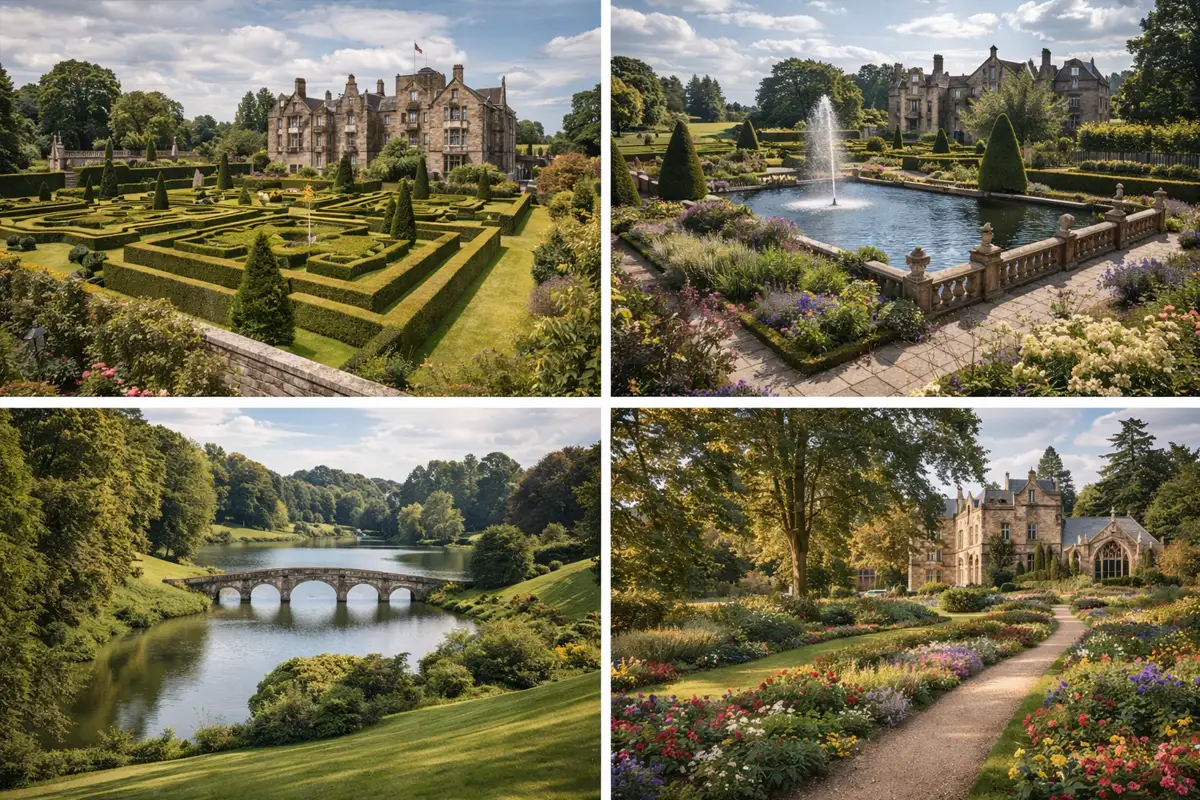
The design of gardens and landscapes is inseparable from the history of the country house. From formal Renaissance gardens to sweeping eighteenth-century parklands, estate landscapes were carefully planned to complement architecture, display wealth, and shape the visitor’s experience long before arrival at the main house.
Major landscape design traditions
- Formal Tudor and Baroque gardens with terraces and geometric layouts
- Seventeenth-century parterres and ornamental water features
- Eighteenth-century naturalistic parklands by Capability Brown
- Victorian pleasure grounds with specimen trees and floral displays
The transition from rigid formality to naturalistic design marked a profound shift in aesthetic philosophy. Sweeping lawns, artificial lakes, and carefully framed vistas created the illusion of untouched countryside while remaining meticulously engineered.
These landscapes now provide some of the most valuable event spaces within country house venues, hosting outdoor ceremonies, drinks receptions, photography sessions, and summer gatherings.
The integration of architecture and landscape remains one of the defining features that distinguish country house venues from modern event locations.
Heritage Features and Decorative Elements
Interior decoration within country houses reflects both artistic fashion and family identity across generations. These decorative layers create the distinctive atmosphere that defines heritage venues and enhances their appeal for ceremonial and celebratory events.
Common heritage features found in country houses
- Hand-carved wood panelling and decorative plaster ceilings
- Original fireplaces in marble, stone, and carved oak
- Portrait galleries and ancestral art collections
- Stained glass, tapestries, and ornamental staircases
These elements served both aesthetic and symbolic purposes. Portraits reinforced lineage, heraldic motifs displayed alliances, and decorative schemes reflected prevailing artistic movements from Renaissance classicism to Victorian romanticism.
Today, such features provide natural focal points for ceremonies, receptions, and photography, often eliminating the need for heavy decoration and allowing events to unfold within authentic historical settings.
Preserving these features while accommodating modern use requires careful management, specialist conservation techniques, and sensitive event planning.
Adapting Historic Houses for Modern Events
The transformation of private country houses into modern event venues represents one of the most significant chapters in their recent history. Changing economic conditions, taxation, and maintenance costs led many families to open their estates to public and commercial use during the twentieth century.
Key adaptations for contemporary hospitality
- Installation of modern heating, lighting, and electrical systems
- Creation of discreet catering kitchens and service corridors
- Accessibility improvements and safety upgrades
- Flexible layouts within historically sensitive rooms
Modernisation projects aim to preserve architectural integrity while enabling practical operation as wedding venues, conference centres, and cultural destinations. This balance requires collaboration between conservation architects, heritage bodies, and hospitality specialists.
Many venues now integrate discreet technology such as hidden AV systems, climate control, and wireless infrastructure to support contemporary event requirements without compromising historic character.
This careful adaptation ensures that historic houses remain both economically sustainable and culturally preserved for future generations.
Preservation and Restoration Practices
The long-term survival of country house venues depends on continuous preservation and carefully planned restoration programmes. These historic buildings require specialised conservation techniques to maintain structural integrity, decorative finishes, and architectural authenticity.
Core principles of heritage preservation
- Retention of original materials wherever possible
- Use of traditional craftsmanship and specialist techniques
- Reversible interventions that protect future conservation options
- Compliance with listed building and heritage regulations
Restoration projects often focus on stabilising foundations, repairing roofs and stonework, conserving plaster ceilings, and reinstating period colour schemes based on archival research.
Interiors are treated with exceptional care. Gilding, murals, tapestries, and historic floor coverings are conserved by specialist artisans trained in museum-grade techniques.
Revenue generated through weddings, corporate events, and hospitality now plays a vital role in funding these preservation programmes, ensuring historic estates remain viable and protected.
The Role of Country Houses in Modern Hospitality
Country houses have become central to the luxury hospitality and events sector, offering a rare combination of heritage, exclusivity, and refined service. Their transformation has created a new category of venues that merge historic character with contemporary standards.
Modern functions of country house venues
- Luxury wedding and celebration destinations
- Corporate retreats and executive meeting venues
- Cultural attractions and heritage tourism centres
- Boutique accommodation and dining experiences
These venues offer immersive experiences that extend beyond events themselves. Guests engage with architecture, landscape, history, and hospitality as a unified narrative rather than a single-purpose facility.
Exclusive-use formats are particularly valued, allowing clients to inhabit entire estates and recreate the traditional rhythms of country house hospitality within a contemporary context.
This positioning continues to attract discerning clients seeking distinction, atmosphere, and cultural depth.
The Future of Heritage Venues
The future of country house venues lies in balancing conservation with innovation. Sustainability, accessibility, and digital integration are becoming central priorities alongside traditional preservation goals.
Emerging directions in heritage venue management
- Sustainable energy systems and environmental stewardship
- Enhanced accessibility without compromising historic fabric
- Digital interpretation and immersive visitor experiences
- Flexible event formats supporting modern hospitality demands
Venues increasingly invest in renewable energy, biodiversity projects, and responsible land management, aligning heritage stewardship with environmental responsibility.
Technological innovation now supports conservation through digital modelling, condition monitoring, and virtual archives, enabling more precise restoration planning and long-term asset management.
This balance ensures that country houses remain relevant cultural landmarks and prestigious event destinations for generations to come.
Conclusion
The history and architecture of country house venues represent one of Britain’s richest cultural legacies. From medieval origins to Georgian elegance and Victorian grandeur, these estates embody centuries of artistic achievement, social history, and architectural innovation.
Through careful preservation, sensitive adaptation, and refined hospitality, country houses have found renewed purpose as venues for weddings, corporate events, and cultural experiences. Their enduring appeal lies not only in beauty, but in narrative, craftsmanship, and a profound sense of place.
As heritage venues continue to evolve, they remain timeless stages for celebration, reflection, and connection — linking the past with the present in ways few modern spaces can achieve.