
Weather and Seasonal Considerations
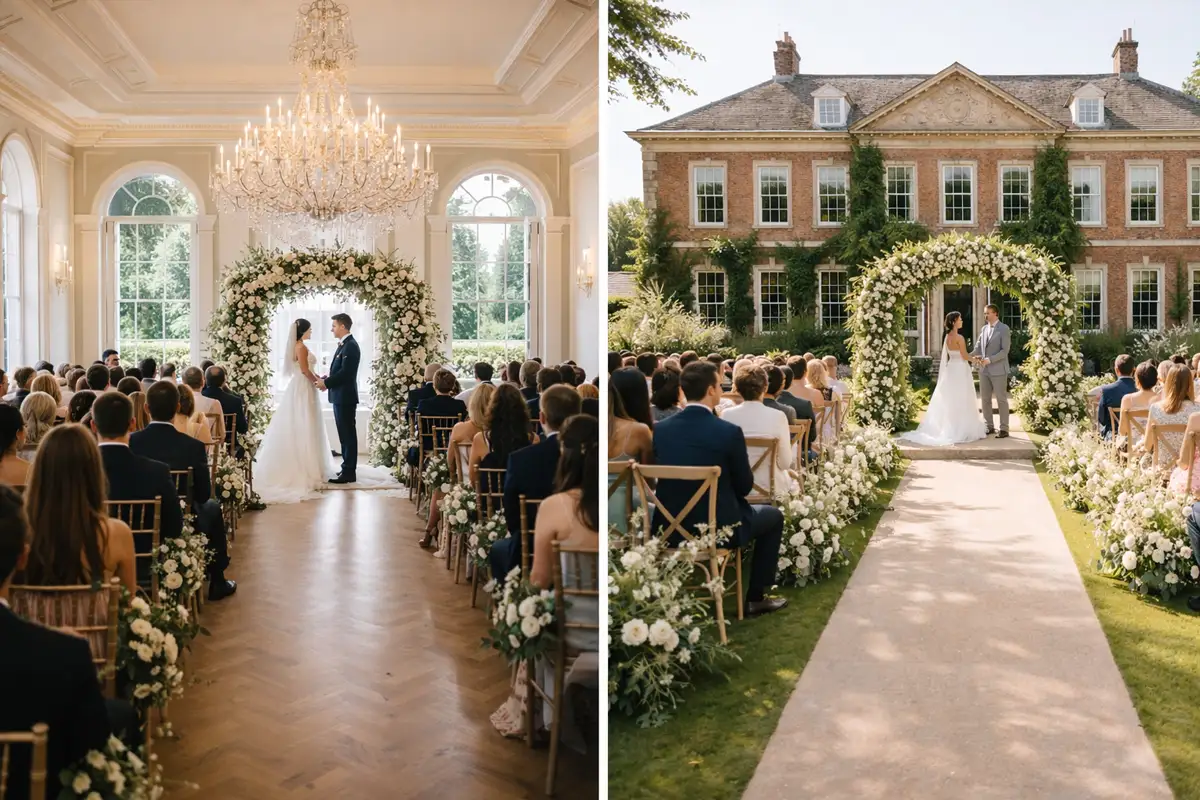
The most significant difference between indoor and outdoor wedding venues is their exposure to weather. Climate conditions directly affect ceremony comfort, guest experience, décor stability, sound quality, and photography planning. In the UK, unpredictable weather makes this factor especially important.
Key weather-related risks and advantages
- Rain and wind disruption for outdoor ceremonies
- Temperature control in indoor venues
- Natural daylight availability for photography
- Seasonal garden appearance and landscape quality
| Factor | Indoor Venues | Outdoor Venues |
|---|---|---|
| Weather impact | Fully protected, stable conditions | High risk of rain, wind, heat, or cold |
| Temperature control | Heating and air conditioning available | Dependent on season and weather patterns |
| Season suitability | Year-round reliability | Best from May to September only |
| Backup options | Not required | Essential indoor contingency space needed |
Outdoor ceremonies offer exceptional natural beauty, but they require detailed contingency planning. Indoor venues provide predictable conditions that protect timelines, décor, sound systems, and guest comfort regardless of season.
Guest Comfort and Accessibility
Guest comfort is one of the most underestimated factors when choosing between indoor and outdoor wedding venues. Seating stability, restroom access, climate control, and physical accessibility directly affect how guests experience the entire day.
Comfort-related considerations
- Walking distances between ceremony, reception, and restrooms
- Surface stability for heels, walking aids, and wheelchairs
- Shade availability and sun exposure
- Noise control and acoustics
| Comfort Factor | Indoor Venues | Outdoor Venues |
|---|---|---|
| Restroom access | Permanent facilities nearby | Portable units often required |
| Mobility support | Ramps, lifts, handrails available | Uneven grass and gravel surfaces common |
| Temperature comfort | Stable indoor climate | Exposure to heat, cold, and wind |
| Noise control | Controlled acoustics | Wind and ambient noise interference |
Outdoor weddings create memorable settings, but long walks, uneven terrain, limited shade, and temporary facilities can reduce guest satisfaction if not carefully managed.
Atmosphere and Visual Style
The visual identity of your wedding is strongly influenced by venue type. Indoor venues provide architectural elegance and design control, while outdoor venues rely on natural scenery and seasonal colour.
Atmospheric differences
- Architectural character versus natural landscape
- Lighting control and evening ambience
- Décor flexibility and installation limits
- Background consistency for photography
Indoor venues offer complete control over lighting, colour temperature, sound design, and décor placement. This ensures visual consistency across ceremonies, receptions, and evening celebrations regardless of time or weather.
Outdoor venues deliver dramatic scenery, open skies, and natural textures that are difficult to replicate indoors. However, seasonal changes, harsh sunlight, and fading daylight require careful scheduling and technical support.
Capacity and Space Flexibility
Space planning is one of the most practical differences between indoor and outdoor wedding venues. Capacity limits, furniture placement, dance floor size, and guest flow determine how comfortable and organised your celebration will feel.
Space planning considerations
- Maximum seated capacity for ceremony and dinner
- Room for dance floor, band, and entertainment
- Clear walkways between tables and service areas
- Separate spaces for ceremony, dining, and evening reception
Indoor venues usually provide clearly defined capacity limits based on fire safety regulations and fixed room layouts. This makes planning predictable but reduces flexibility if your guest list changes.
Outdoor venues often allow more adaptable layouts and larger guest counts, but require additional infrastructure such as flooring, staging, lighting rigs, and marquees to maintain comfort and safety.
For larger weddings, indoor venues provide better crowd control and service flow, while outdoor venues suit medium-sized celebrations with open layouts and informal seating arrangements.
Logistics and Setup Complexity
Venue type directly affects delivery schedules, supplier access, installation time, and overall operational complexity. Poor logistics planning is one of the main causes of wedding day delays and setup stress.
Logistical factors to evaluate
- Access routes for catering, décor, and technical teams
- Power supply availability and distribution
- Installation time windows and noise restrictions
- Storage areas for equipment and flowers
Indoor venues typically provide established loading bays, permanent power supplies, lighting systems, and fixed service routes. This reduces setup time and technical risks.
Outdoor venues often require temporary power generators, cabling, flooring, staging, sound towers, and weather protection. Each additional element increases coordination demands and failure points.
If multiple suppliers work simultaneously, limited access roads or garden paths can quickly become congested. Always confirm staging areas, unloading sequences, and emergency vehicle access in advance.
Photography and Lighting Conditions
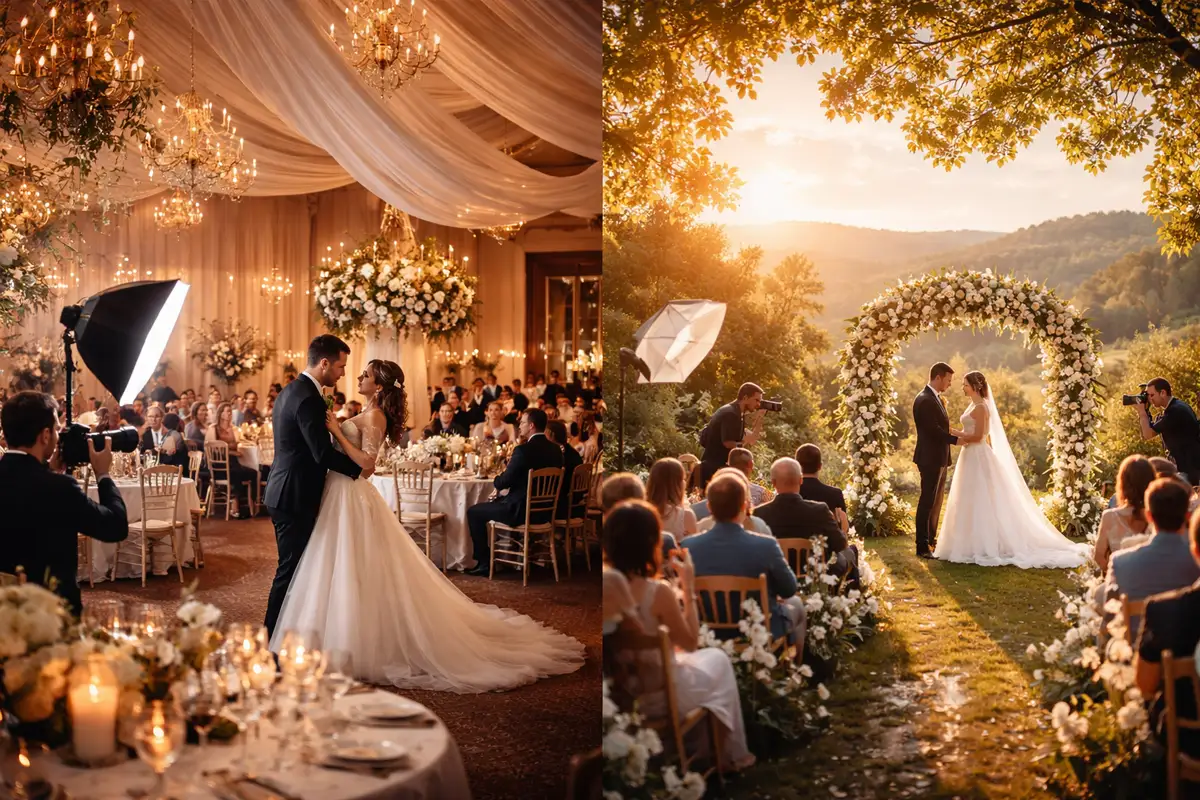
Lighting conditions are one of the most decisive factors for wedding photography and videography. Venue type determines light quality, background consistency, and the reliability of shooting conditions throughout the day.
Photography planning factors
- Natural light direction and intensity
- Indoor window placement and ceiling height
- Sun position during ceremony and portraits
- Artificial lighting quality for evening sessions
Indoor venues allow controlled lighting setups with consistent colour temperature, balanced exposure, and predictable background tones. This produces uniform image quality regardless of time or weather.
Outdoor venues deliver dramatic landscapes and soft natural light but introduce challenges such as harsh midday sun, shadows, wind movement, and rapidly changing brightness near sunset.
Always confirm indoor backup portrait locations and sheltered outdoor areas. This ensures uninterrupted shooting in case of rain, wind, or sudden light changes.
Cost and Budget Implications
Budget planning differs significantly between indoor and outdoor wedding venues. While outdoor venues may appear more affordable initially, hidden infrastructure and logistics costs often make them equal or more expensive than indoor alternatives.
Main cost components to compare
- Base venue hire fee
- Infrastructure and equipment rental
- Weather protection and contingency planning
- Technical and staffing requirements
Indoor venues usually include furniture, lighting, heating or air conditioning, restrooms, kitchens, and permanent sound systems in the hire price. This creates predictable budgets and fewer additional contracts.
Outdoor venues frequently require supplementary rentals such as marquees, flooring, staging, generators, portable restrooms, heaters, fans, and extended staffing. These elements quickly increase total expenditure.
Indoor weddings provide stronger cost control, while outdoor weddings require larger contingency budgets to absorb weather-related changes and technical adjustments.
Choosing the Right Venue Type for Your Wedding
The decision between an indoor and outdoor wedding venue should be guided by practical priorities rather than visual preference alone. Comfort, logistics, budget stability, and guest experience often outweigh aesthetic considerations.
Questions to guide your decision
- How important is weather reliability to your schedule?
- What proportion of guests require easy accessibility?
- Is your budget flexible enough for infrastructure costs?
- Do you prefer controlled design or natural scenery?
Indoor venues suit couples who prioritise predictability, formal atmosphere, technical reliability, and year-round scheduling flexibility. They are particularly well suited to winter weddings, large guest lists, and complex entertainment programmes.
Outdoor venues appeal to couples seeking natural scenery, relaxed ambience, and strong seasonal character. They work best for spring and summer weddings with moderate guest counts and flexible schedules.
Conclusion
Indoor and outdoor wedding venues each offer distinct advantages and challenges. Indoor venues provide reliability, comfort, and controlled design, while outdoor venues deliver natural beauty, open space, and memorable scenery.
The ideal choice depends on your season, guest profile, budget structure, and tolerance for operational complexity. By carefully assessing weather risks, logistics, comfort factors, photography needs, and cost implications, you can select a venue type that supports both your vision and a smooth wedding day experience.
Ultimately, the best venue is not simply the most beautiful one, but the one that allows you and your guests to relax, celebrate comfortably, and enjoy every moment without unnecessary stress.