
Contents:
- Why Choose a Marquee Wedding Reception
- Choosing the Right Marquee Type and Size
- Reception Layout and Space Planning
- Flooring, Power, and Infrastructure
- Catering and Service Logistics
- Lighting, Atmosphere, and Décor
- Weather Protection and Backup Planning
- Guest Comfort and Facilities
- Marquee Reception Costs and Budget Planning
- Booking Timeline and Supplier Coordination
Why Choose a Marquee Wedding Reception
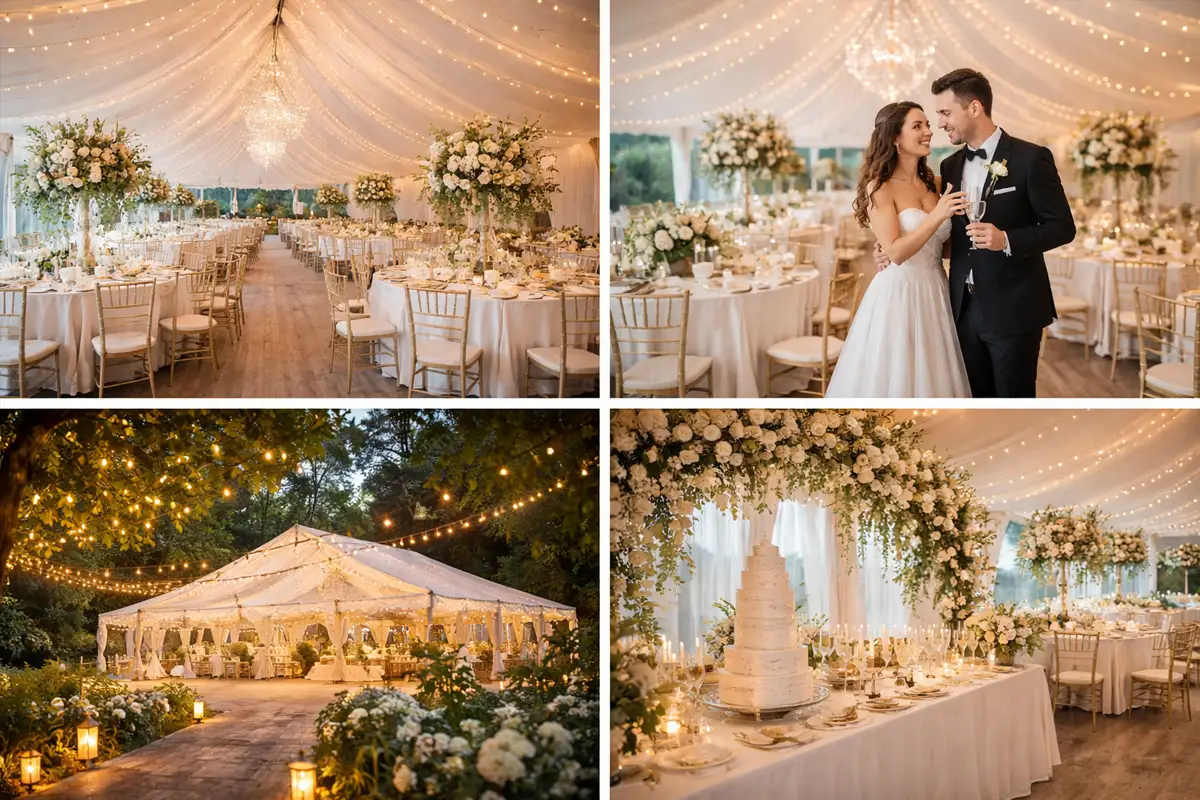
A marquee wedding reception offers unmatched flexibility, privacy, and creative freedom. Unlike fixed indoor venues, a marquee allows couples to design their reception space from the ground up, selecting layouts, décor, lighting, and guest flow to suit their vision perfectly.
Key advantages of marquee receptions
- Complete control over layout, design, and capacity
- Exclusive use of private gardens or estate grounds
- Seamless indoor–outdoor experience for guests
- Flexible scheduling without strict venue time limits
Marquees are especially popular for countryside weddings, where landscaped gardens, lawns, and historic estates provide natural backdrops that elevate the atmosphere without heavy decoration.
This option suits couples seeking individuality, larger guest numbers, and the freedom to combine formal dining with relaxed social areas, lounges, and dance zones within a single connected space.
Choosing the Right Marquee Type and Size
Selecting the correct marquee type and dimensions is the foundation of successful reception planning. The structure must accommodate guest numbers, dining layouts, dance floors, staging, and service areas while remaining visually balanced within the venue grounds.
Main marquee types for wedding receptions
- Traditional pole marquees for classic countryside style
- Clear-span marquees for modern, open-plan layouts
- Sailcloth tents for soft, romantic aesthetics
- Orangery-style structures for luxury garden receptions
Size calculations must include not only seating capacity but also catering zones, bar areas, entertainment staging, circulation space, and structural supports.
Underestimating space requirements is one of the most common planning mistakes and often results in cramped layouts, restricted service movement, and reduced guest comfort.
Professional marquee suppliers will assess ground conditions, gradients, access routes, and wind exposure before confirming final structure dimensions and anchoring methods.
Reception Layout and Space Planning
Effective layout planning determines how guests move, dine, socialise, and celebrate throughout the reception. A well-designed marquee layout balances visual impact with operational efficiency and guest comfort.
Core layout zones to define
- Dining area with tables and service aisles
- Dance floor and stage or DJ zone
- Bar and drinks service stations
- Lounge, social, and quiet seating areas
Long banquet tables create dramatic visual lines and encourage social interaction, while round tables maximise capacity and support formal service. Dance floors should be positioned centrally or near staging to maintain energy flow throughout the evening.
Circulation routes must remain clear between catering areas, guest seating, and restrooms. Narrow aisles or blocked exits compromise both service efficiency and safety compliance.
Early collaboration between marquee suppliers, caterers, and venue coordinators ensures structural supports, lighting rigs, and service routes are integrated seamlessly into the final plan.
Flooring, Power, and Infrastructure
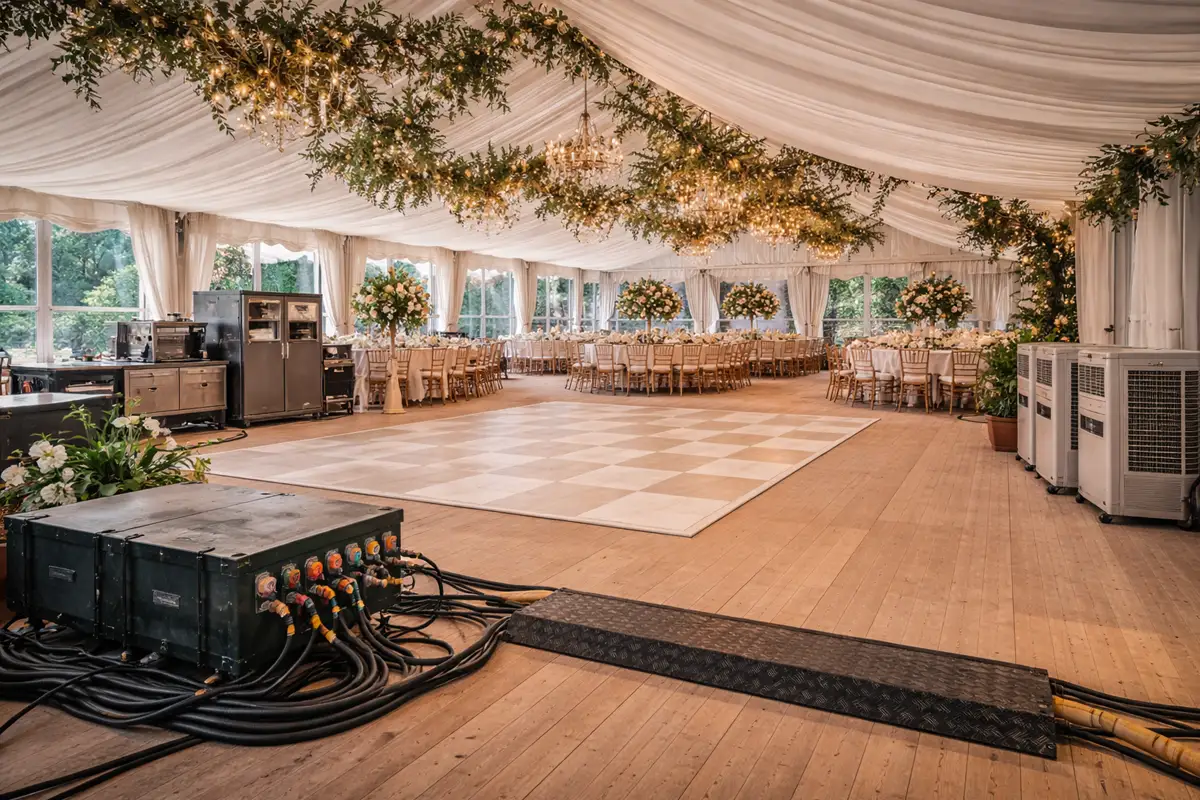
Infrastructure is the technical backbone of every marquee wedding reception. Without proper flooring, power supply, and structural preparation, even the most beautiful design can become uncomfortable or operationally fragile.
Essential infrastructure components
- Solid flooring to stabilise seating and dance areas
- Weather-resistant ground protection beneath carpets
- Dedicated power distribution for catering, lighting, and sound
- Heating or cooling systems depending on season
Professional flooring systems prevent sinking furniture, uneven surfaces, and moisture penetration. This is especially important for formal dining layouts and guest safety, particularly in wet or soft ground conditions.
Power supply planning must account for catering equipment, refrigeration, lighting rigs, sound systems, and emergency backup circuits. Portable generators are commonly used and should be positioned discreetly with acoustic shielding.
Early technical site surveys ensure cable routing, load calculations, and anchoring systems are approved before final layouts are confirmed.
Catering and Service Logistics
Catering logistics are significantly more complex in marquee environments than in permanent venues. Temporary kitchens, service routes, and refrigeration systems must be designed to maintain food quality, timing accuracy, and guest experience.
Key catering planning priorities
- Location of temporary kitchen and prep zones
- Clear service routes between kitchen and dining areas
- Cold storage and refrigeration capacity
- Waste management and hygiene compliance
Marquee receptions often require mobile kitchens, refrigerated trailers, and dedicated service tents positioned behind the main structure. This allows chefs to maintain temperature control and plating standards comparable to indoor venues.
Service flow must be rehearsed carefully. Narrow access points or long carrying distances increase service time and reduce meal quality if not planned precisely.
Bar placement should avoid congestion near entrances and dance floors, ensuring smooth circulation and consistent service throughout the evening.
Lighting, Atmosphere, and Décor
Lighting design transforms a marquee from a temporary structure into an elegant reception space. The combination of functional lighting and decorative installations defines atmosphere, guest comfort, and photographic quality.
Popular marquee lighting styles
- Festoon and bistro lighting for warm ambient glow
- Chandeliers and lantern installations for formal elegance
- Pin-spot lighting for table highlighting
- Colour-wash uplighting for evening transitions
Layered lighting systems allow the atmosphere to evolve throughout the day, from bright dining environments to intimate evening celebrations. Dimming capability is essential for speeches, first dances, and party transitions.
Décor elements such as draping, ceiling linings, foliage installations, and statement backdrops soften structural lines and enhance acoustic quality.
All decorative elements must be securely fixed and compliant with fire regulations, particularly when using fabrics, candles, and electrical fittings.
Weather Protection and Backup Planning
Weather planning is non-negotiable for marquee receptions. Even in summer, wind, rain, and temperature drops can affect comfort, décor stability, sound quality, and timing. A well-designed marquee plan should feel resilient rather than fragile.
Core weather protection measures
- Sidewalls and clear panels for wind and rain protection
- Proper anchoring and wind-rated structural supports
- Heating solutions for cooler evenings and shoulder seasons
- Dry access routes and covered walkways from the main venue
Drainage and ground condition assessment should happen early. Wet ground can cause sinking furniture, slippery pathways, and uncomfortable guest movement unless flooring and access routes are properly prepared.
Marquees can withstand a wide range of conditions when installed professionally, but guest comfort depends on temperature control, stable surfaces, and protected movement between zones.
Guest Comfort and Facilities
Guest comfort is one of the biggest success factors for marquee receptions. Countryside settings often include longer walking distances, uneven surfaces, and exposure to weather, so facilities must be planned more deliberately than in indoor venues.
Comfort essentials for marquee receptions
- Restrooms located close enough to avoid long walks
- Clear signage and lighting on paths and exits
- Seating variation with lounge areas and quiet zones
- Climate measures such as fans, heaters, and blankets
Portable luxury restroom units are common for larger receptions and should be positioned discreetly with illuminated pathways. Cloakroom areas and sheltered waiting spaces protect guest flow during cooler or wet conditions.
Acoustics also influence comfort. Marquees require thoughtful speaker placement and controlled volume zones so guests can talk comfortably while the dance floor remains energetic.
Marquee Reception Costs and Budget Planning
Marquee receptions require a different budget structure compared to indoor venues because you are effectively building a temporary reception space. Many couples underestimate infrastructure costs, which can create budget pressure later in planning.
Main cost categories to account for
- Marquee hire, installation, and breakdown
- Flooring, linings, and climate control
- Power distribution and generator rental
- Catering infrastructure such as mobile kitchens and refrigeration
- Lighting, décor, furniture, and entertainment staging
Costs vary based on size, style, season, and ground conditions. Premium structures with full linings, chandeliers, and luxury flooring will naturally sit at higher price points.
To prevent overspending, prioritise infrastructure and comfort first, then invest in décor and styling once operational requirements are secured.
Booking Timeline and Supplier Coordination
Successful marquee receptions depend on early booking and precise coordination between multiple suppliers. Because a marquee creates a temporary venue, lead times are longer and dependencies between contractors are stronger than in traditional indoor settings.
Recommended booking timeline
- 12–18 months before: confirm venue permissions and marquee supplier
- 9–12 months before: secure caterer and infrastructure providers
- 6–9 months before: book lighting, décor, and entertainment
- 3–6 months before: finalise layouts, floor plans, and technical surveys
- 4–6 weeks before: confirm schedules, access times, and weather contingencies
Supplier coordination should be led by a single planning contact or professional coordinator. Installation sequences must be tightly scheduled to avoid congestion, equipment conflicts, and delayed setups.
Marquee installation typically begins several days before the wedding. Flooring, linings, lighting rigs, and power distribution must be completed before catering and décor teams arrive.
Final walk-throughs with the venue and lead suppliers should take place one to two weeks before the event to confirm layouts, emergency routes, and weather backup readiness.
Conclusion
Planning a wedding reception in a marquee offers extraordinary creative freedom, privacy, and atmosphere, but it also demands careful technical planning and disciplined coordination. When executed correctly, a marquee becomes a bespoke celebration space that rivals the elegance of permanent venues.
By investing in strong infrastructure, thoughtful layouts, guest comfort, and experienced suppliers, couples can create receptions that feel seamless, luxurious, and unforgettable in any season.
A well-planned marquee reception does not simply host a wedding — it creates a destination experience that guests remember long after the final dance.