
Contents:
- Spring Weddings in the Countryside
- Summer Weddings in Rural Venues
- Autumn Countryside Celebrations
- Winter Weddings in Country Estates
- Weather Risks and Backup Planning
- Guest Comfort Across the Seasons
- Photography, Lighting, and Seasonal Atmosphere
- Costs, Availability, and Seasonal Pricing
Spring Weddings in the Countryside
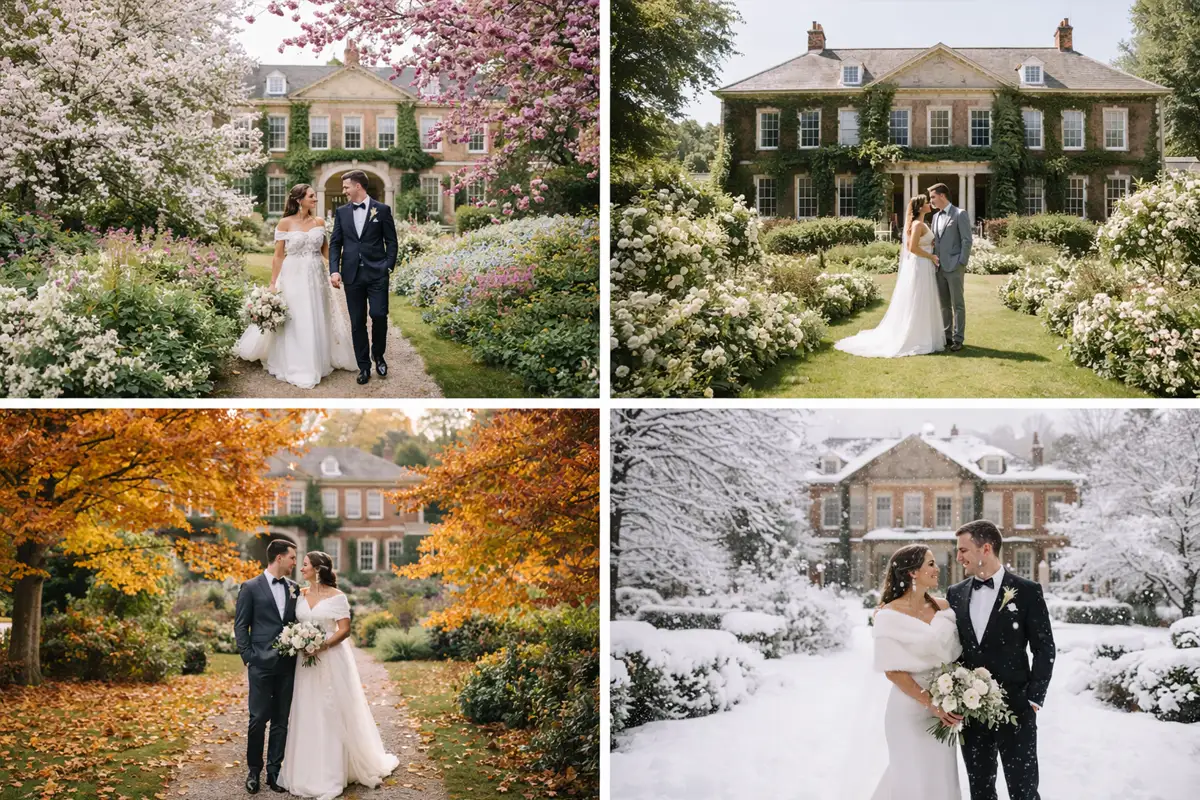
Spring is one of the most romantic seasons for countryside weddings. Awakening landscapes, blooming gardens, and mild temperatures create a fresh and elegant atmosphere that suits both classic and garden-inspired celebrations.
Why spring is a popular choice
- Flowering gardens and vibrant natural scenery
- Comfortable daytime temperatures
- Soft natural light ideal for photography
- Wide availability of seasonal florals
Spring weddings benefit from long daylight hours and dynamic colour palettes. Country estates showcase magnolia trees, tulips, wisteria, and fresh lawns that require minimal artificial decoration.
However, spring weather remains unpredictable. Sudden rain showers, cool evenings, and changing temperatures require flexible planning and reliable indoor backup options.
Spring suits couples seeking freshness, romance, and elegant natural colour without the intense heat or peak-season pricing of summer months.
Summer Weddings in Rural Venues
Summer remains the most popular season for countryside weddings due to reliable daylight, outdoor ceremony opportunities, and full use of gardens, terraces, and open landscapes.
Advantages of summer weddings
- Longest daylight hours for extended celebrations
- Excellent conditions for outdoor ceremonies and receptions
- Consistent floral availability and mature gardens
- Ideal weather for guest movement between spaces
Summer weddings allow flexible layouts, lawn cocktails, alfresco dining, and evening garden receptions. Photography benefits from golden-hour portraits and rich natural backdrops.
The main challenges include peak pricing, limited venue availability, and heat management. High temperatures can affect guest comfort, food service timing, and makeup durability.
Summer suits couples prioritising outdoor experiences, vibrant atmosphere, and long celebrations, but requires early booking and careful comfort planning.
Autumn Countryside Celebrations
Autumn offers one of the most visually striking seasons for countryside weddings. Rich foliage, warm colour palettes, and softer light create sophisticated and atmospheric celebrations within country estates.
Autumn wedding highlights
- Golden and amber landscapes with dramatic scenery
- Cooler temperatures and reduced heat discomfort
- Lower venue demand compared to summer peak season
- Seasonal menus and harvest-inspired décor options
Autumn weddings benefit from balanced lighting conditions, particularly in late afternoon. Gardens transform into natural backdrops that require minimal enhancement for photography.
The main considerations include shorter daylight hours, increased rainfall probability, and cooler evenings that may restrict prolonged outdoor activities.
Autumn suits couples seeking elegance, rich visual character, and improved venue availability without sacrificing countryside charm.
Winter Weddings in Country Estates
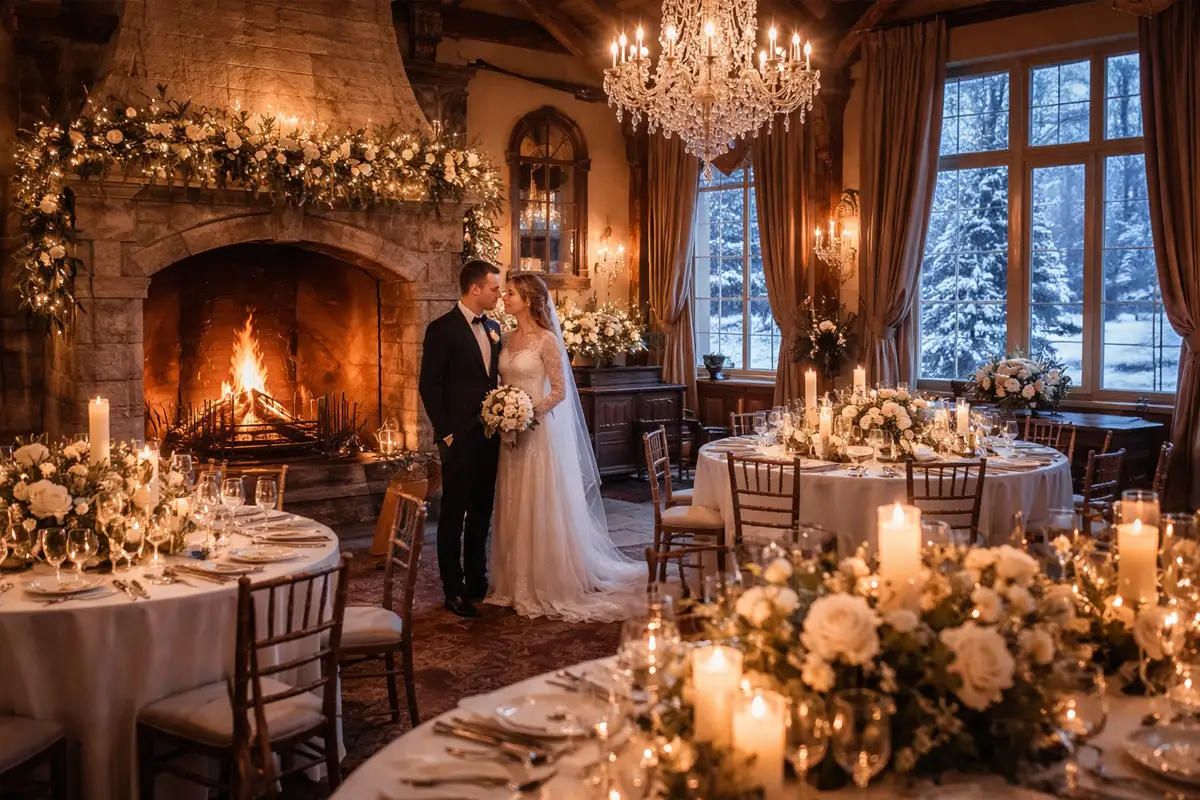
Winter weddings in the countryside offer a uniquely intimate and atmospheric experience. Country estates transform into warm, candlelit interiors where fireplaces, grand halls, and historic drawing rooms create elegant and romantic surroundings.
Why winter weddings appeal to many couples
- Lower venue hire costs and greater date availability
- Exclusive use more easily secured during off-peak months
- Dramatic interiors with fireplaces and festive lighting
- Formal atmosphere ideal for evening receptions and black-tie styles
Winter celebrations focus primarily on indoor spaces, allowing full control over lighting, temperature, and décor. Rich colour palettes, velvet textures, candle installations, and seasonal florals enhance warmth and visual depth.
The main challenges include limited daylight, unpredictable weather conditions, and travel disruptions for guests. Ceremony timing must account for early sunset and reduced natural light for photography.
Winter suits couples seeking exclusivity, formal elegance, and cost efficiency while embracing the intimate charm of country house interiors.
Weather Risks and Backup Planning
Weather remains the single most unpredictable factor in countryside weddings. Each season presents distinct risks that must be addressed through structured contingency planning and flexible venue arrangements.
Common weather-related challenges
- Rain and wind affecting outdoor ceremonies and décor
- Extreme heat impacting guest comfort and food service
- Cold temperatures restricting outdoor activities
- Fog, frost, or snow disrupting travel schedules
Successful countryside weddings always include prepared indoor alternatives. Backup ceremony rooms, covered reception areas, and flexible layouts allow rapid transitions without disrupting schedules or guest experience.
Weather monitoring should begin at least 72 hours before the event, with final ceremony location decisions confirmed on the morning of the wedding.
Clear communication with suppliers, officiants, photographers, and guests ensures smooth transitions and prevents confusion when plans change due to weather conditions.
Guest Comfort Across the Seasons
Guest comfort varies significantly across seasons and directly affects enjoyment, energy levels, and overall event satisfaction. Countryside settings amplify temperature shifts, walking distances, and exposure to natural elements.
Comfort planning priorities
- Temperature control and ventilation availability
- Walking surfaces and footwear suitability
- Seating protection from sun, wind, and cold
- Restroom accessibility and indoor refuge areas
Spring and autumn require layered comfort solutions such as blankets, shawls, and indoor retreat zones. Summer demands shade structures, hydration stations, and cooling airflow. Winter prioritises heating zones, cloakroom space, and insulated interiors.
Older guests and families with children are particularly sensitive to temperature extremes and uneven terrain commonly found in rural estates.
Thoughtful comfort planning reduces early departures, improves participation, and enhances the emotional tone of the celebration across all seasons.
Photography, Lighting, and Seasonal Atmosphere
Season strongly influences photography style, lighting conditions, and the overall visual mood of a countryside wedding. Natural light, landscape colour, and sunset timing shape both ceremony atmosphere and final wedding albums.
Seasonal photography considerations
- Length and quality of daylight
- Sun position during ceremony and portraits
- Seasonal landscape colour and texture
- Indoor lighting requirements for evening sessions
Spring and summer provide extended daylight and vibrant scenery, ideal for outdoor portraits and natural group photography. Soft evening light enhances skin tones and creates romantic sunset imagery.
Autumn offers rich colour palettes and balanced light with reduced glare. Winter relies primarily on indoor lighting design, candle installations, and window light to maintain atmosphere and image consistency.
Seasonal atmosphere plays a major role in storytelling. Garden bloom, falling leaves, frost, or candlelit interiors become integral narrative elements within the visual record of the wedding day.
Costs, Availability, and Seasonal Pricing
Season directly affects venue pricing, supplier availability, and overall budget structure. Understanding seasonal patterns allows couples to secure better value without compromising quality.
Typical seasonal pricing trends
- Peak season: June to September with highest demand and pricing
- Mid-season: April, May, and October with moderate pricing
- Off-season: November to March with significant discounts
- Weekend premiums and weekday savings
Summer weekends command the highest venue hire fees and minimum spend requirements. Popular country estates are often booked 12 to 24 months in advance for peak dates.
Winter weddings benefit from reduced hire rates, flexible contracts, and greater supplier availability. Many venues offer inclusive packages and extended exclusivity during off-peak months.
Season also influences floral pricing, catering menus, heating or cooling costs, and technical requirements. Comprehensive budgeting should always include seasonal infrastructure and comfort expenses.
Conclusion
Choosing the right season for a countryside wedding is a strategic decision that shapes atmosphere, comfort, budget, and visual storytelling. Each season offers distinct advantages — from spring freshness and summer vibrancy to autumn richness and winter intimacy.
The ideal timing depends on your priorities: outdoor ceremony potential, guest comfort, photography style, venue availability, and financial planning. Successful seasonal weddings balance aesthetic vision with practical preparation and weather resilience.
By understanding seasonal characteristics and planning accordingly, couples can select the time of year that best reflects their style, supports guest enjoyment, and creates a memorable countryside celebration that remains timeless long after the day itself.